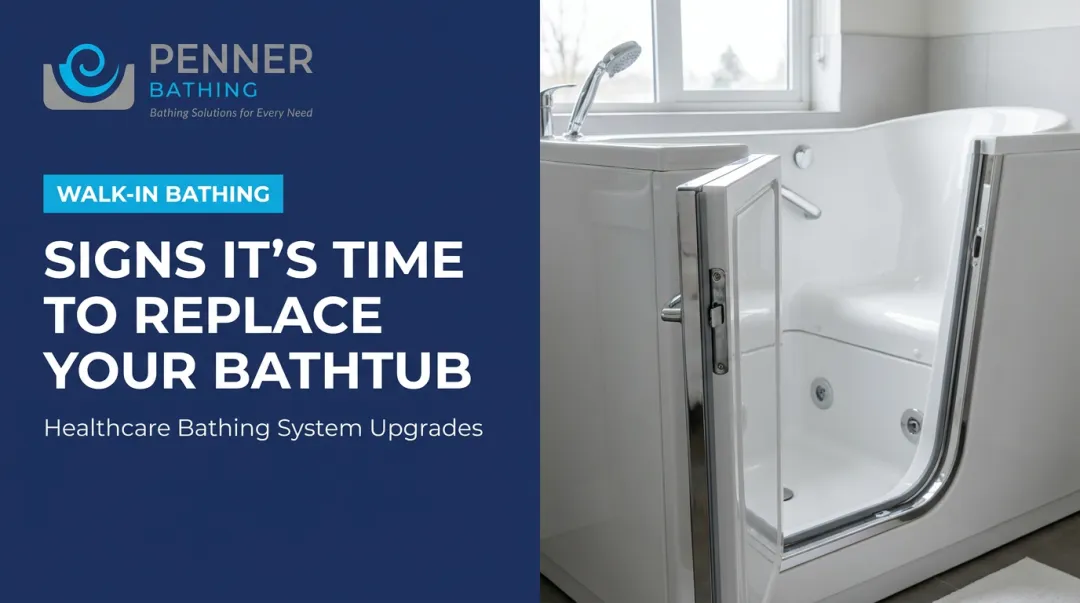

Here's the good news: a leaking door almost never means the tub itself is defective. Walk-in tubs are built to hold water tight while full, and the door mechanism is engineered for exactly that job. When water escapes, it's typically a seal, latch, or alignment issue, not a flaw in the product's design.
This guide walks through the common causes, step-by-step fixes, and how to decide whether to repair the door or replace the unit. We'll also cover when it's time to call in a professional, such as the team at Penner Bathing Spas.
TL;DR
- Worn gaskets, misaligned doors, dirty seals, or loose latches cause most door leaks
- You can fix most leaks without replacing the entire tub
- Start with a clean seal, latch adjustment, or door realignment
- Warped frames, base failure, or other structural leaks need a certified technician
What Causes a Walk-In Tub Door to Leak?
A walk-in tub door depends on three things working together: a watertight seal, a functioning latch, and correct alignment. If any one of these fails, water finds a way out.
The usual failure points are:
- Worn or compressed gasket that no longer seats evenly against the frame
- Loose or faulty latch that fails to pull the door tight to the seal
- Misaligned door that leaves a gap along the threshold or side jamb
Walk-in tubs with pressure-sealed doors follow ASME A112.19.15, the national standard for material, mechanical, and testing requirements. That includes the door’s ability to maintain water tightness while full. These tubs are engineered to be leak-resistant by design.

No seal lasts forever, though. The gasket around your door is a wear component, similar to a windshield wiper or a refrigerator door seal. It flexes every time you open and close the door, takes exposure to water and cleaning products, and gradually loses its original shape.
What this means for you:
- Leaks usually signal maintenance is due, not a manufacturing defect
- Regular inspection catches problems before they cause damage
- Most fixes are simple once you know where to look
Common Door Leak Problems
Most walk-in tub leaks fall into four recognizable patterns. Learning to spot these saves you time diagnosing the issue.
Water Seeping From the Bottom of the Door
Symptoms: Puddling at the base of the door after bathing.
Likely cause: A worn or dirty door gasket. Manufacturer documentation from Hydro Dimensions confirms that dirt and debris on the seal or door-jamb contact surface is a direct cause of minor door leaks.
Water Dripping From Door Edges or the Hinge Side
Symptoms: Streaks or drips along the frame's sides.
Likely cause: A misaligned door, often from settling, improper leveling, or a warped frame.
Door Doesn't Latch Tightly
Symptoms: The handle feels loose, or the door pops open slightly under water pressure.
Likely cause: A worn or damaged latch mechanism that isn't compressing the seal fully.
Leaking From the Tub Base or Wall Junction
Symptoms: Water shows up near the base, not the door seam itself.
Likely cause: Caulking failure or improper base installation. This isn't a door problem at all, but it's easy to mistake for one.

Why These Failures Happen (Root Causes)
Leaks rarely appear out of nowhere. They build up from everyday conditions:
- Repeated opening and closing stresses the seal over thousands of cycles
- Soap scum and moisture exposure gradually degrade rubber gaskets and finish coatings
- Improper installation, including uneven leveling, can warp the frame and throw off door alignment
- Leaving the door closed when the tub isn't in use can deform the gasket. Manufacturer guidance is to leave the door open between baths
- Skipping routine seal wipe-downs lets debris accumulate at the contact surface
The Cost of Ignoring a Leak
Left alone, a small leak can turn into a costly problem:
- Water damage to flooring and subfloor, which gets expensive fast
- Mold growth can start quickly: fungal germination can begin in less than five days after wetting, according to National Academies research
- Slip hazards, ironic given that these tubs exist to prevent falls among the more than 14 million adults 65+ who fall each year
- Higher repair bills if a small fix turns into a bigger structural problem
How to Fix a Leaking Walk-In Tub Door (Step-by-Step)
Diagnosing the exact leak source before touching anything prevents wasted effort. Rushing to replace a part before confirming the cause often means doing the job twice.
Step 1: Identify Exactly Where the Water Is Coming From
- Dry the floor completely so you can see the exact path water takes
- Run a test bath, watching the door, hinges, latch, and base as it fills and while full
- Note the timing: does water appear immediately at fill, or only under pressure once the tub is full?
- Test the door mechanically by opening and closing it a few times to see if the leak worsens
Step 2: Confirm the Root Cause
Before replacing anything, determine which component is actually failing:
- Isolate the source: seal/gasket, latch, door alignment, or base/wall junction
- Rule out unrelated causes such as a nearby plumbing leak or simple condensation
- Confirm the failing part before you order or swap anything

Step 3: Apply the Correct Fix
If the seal or gasket is worn or dirty:
- Clean it thoroughly with a non-abrasive cleaner to remove soap scum and buildup
- If cleaning doesn't help, replace the gasket with a manufacturer-approved part
- Penner Bathing ships replacement seals same-day on orders placed before 2 PM CST; peel off the old seal and press the new one into place
- Check that the new gasket seats evenly around the full door frame
If the door is misaligned:
- Check and tighten hinge screws or mounting brackets
- Verify the tub is level; settling throws off alignment more than people expect
- Confirm the door closes flush against the frame from top to bottom
If the latch is failing:
- Inspect the handle and locking mechanism for wear or play
- Tighten or replace latch hardware
- Test that the latch fully engages a watertight seal when closed
If the leak is from the base or wall junction:
- Reapply silicone caulk around the base and wall seams
- Check the tub base for cracks
- Call in a professional if leaking continues after resealing
Step 4: Test and Confirm the Fix
Refill the tub completely and let it sit full for 15–20 minutes. Inspect the same problem area for moisture.
Repeat the check over your next several baths. A fix that holds once is not proof it is permanent.
When Should You Fix vs Replace a Walk-In Tub Door?
Not every door leak means you need a new tub. Weigh repair cost against age, warranty coverage, and safety risk, then match your situation to the scenarios below.
| Scenario | Fix | Replace |
|---|---|---|
| Tub under 5 years old, single worn seal | Replace the gasket (cheap and quick) | Rarely necessary |
| Still under manufacturer warranty | Contact the maker first; seals and door parts are often covered | Only if the claim is denied or the tub is discontinued |
| Door frame warped or cracked | Possible if caught early and damage is minor | Recommended if structural integrity is compromised |
| Older tub, repeated leaks despite repairs | Diminishing returns on repeat part swaps | A new unit like the Dream Spa Walk-In Bath can cost less over time than stacked repairs |
| Leak tied to installation flaw (unsealed base, uneven floor) | Requires reinstallation, not a part swap | Consider replacement if reinstall cost nears replacement cost |
For context, Angi reports that door seals and similar replacement parts typically run $50 to $300, while a full new walk-in tub with professional installation averages closer to $13,100. A $200 seal swap almost always beats full replacement when the rest of the tub is sound.

Common Mistakes to Avoid When Fixing a Leaking Door
Even a solid repair can fail if you chase the wrong cause or cut a corner. Avoid these common pitfalls:
- Blaming the seal first without checking the base and caulking; base leaks often mimic door leaks
- Skipping the full-tub test after a repair, only to find the leak returns on the next real bath
- Using generic hardware-store sealants instead of manufacturer-recommended gaskets and caulk
- Ignoring electrical safety near jets and heaters; disconnect power before inspecting water lines
Preventive Measures to Avoid Future Leaks
A little routine attention beats an emergency repair every time.
- Wipe down and inspect the door seal monthly for grime or wear
- Schedule an annual professional check-up, especially for facility or long-term care installs with heavy daily use
- Confirm the tub sits level on a properly supported surface so the seal is not under constant stress
- Choose durable UL and CUL Listed equipment; Penner Bathing backs seals with same-day parts shipping on orders before 2 PM CST
Conclusion
Most walk-in tub door leaks are fixable once you've pinned down the actual cause, whether that's a worn seal, a loose latch, or a door that's slightly out of alignment. Correct diagnosis matters more than fast action. Guessing wrong just means fixing it twice.
Knowing when a simple repair makes sense versus when it's time to invest in a new unit protects more than your bathroom floor. It protects the safety the tub was meant to provide.
Frequently Asked Questions
What keeps a walk-in tub from leaking?
An airtight door seal, a secure latch, proper leveling during installation, and quality caulking at the base all work together. When each piece functions correctly, the tub stays watertight.
What is the lifespan of a walk-in tub?
Most walk-in tubs last 10–20 years with normal use, though seals and latches usually need attention sooner. Check your product’s warranty for coverage on those wear parts.
Can I fix a leaking walk-in tub door myself?
Minor issues like a dirty seal or a loose latch are usually DIY-friendly. Structural problems or base leaks are best left to a professional technician.
How much does it cost to repair a leaking walk-in tub door?
Replacement parts like door seals generally run $50 to $300, while professional maintenance visits average $100 to $300. Minor leak repairs typically run $150–$800, according to Angi.
Is a leaking walk-in tub door covered under warranty?
Coverage depends on the manufacturer and how the unit was installed. Review your warranty terms before attempting a repair—DIY work can sometimes void coverage.
How often should I inspect my walk-in tub door seal?
A monthly visual check paired with an annual professional inspection catches wear before it turns into a real leak.