
Bedridden patients, those recovering from surgery, and long-term care residents with limited mobility rely on this technique daily. Many staff learn it quickly but never revisit the details that separate a rushed bath from one that's actually safe and thorough.
This guide walks through the supplies you need, the step-by-step process, best practices that protect skin integrity, and what to consider when sponge baths stop being a sustainable long-term solution.
Key Takeaways
- Sponge baths clean patients who can't bathe independently while protecting comfort and dignity
- Proper prep (supplies, water temperature, privacy) prevents burns, chilling, and skin damage
- A head-to-toe, clean-to-dirty order stops cross-contamination between body regions
- At scale, reliable bathing equipment cuts staff time and manual error versus repeated bed baths
What Is a Sponge Bath in Nursing?
A sponge bath, or bed bath, means cleansing a patient's body while they remain in bed, using a basin, washcloths, and mild soap. It's the standard hygiene solution when a patient can't safely transfer to a tub or shower.
Who typically needs one:
- Bedridden or critically ill patients
- Post-surgical patients with limited mobility
- Residents with significant mobility impairment
- Patients on bed rest for medical reasons
Nursing education resources distinguish a few variations:
- Complete bed bath – full-body care for patients who can't tolerate other bathing methods
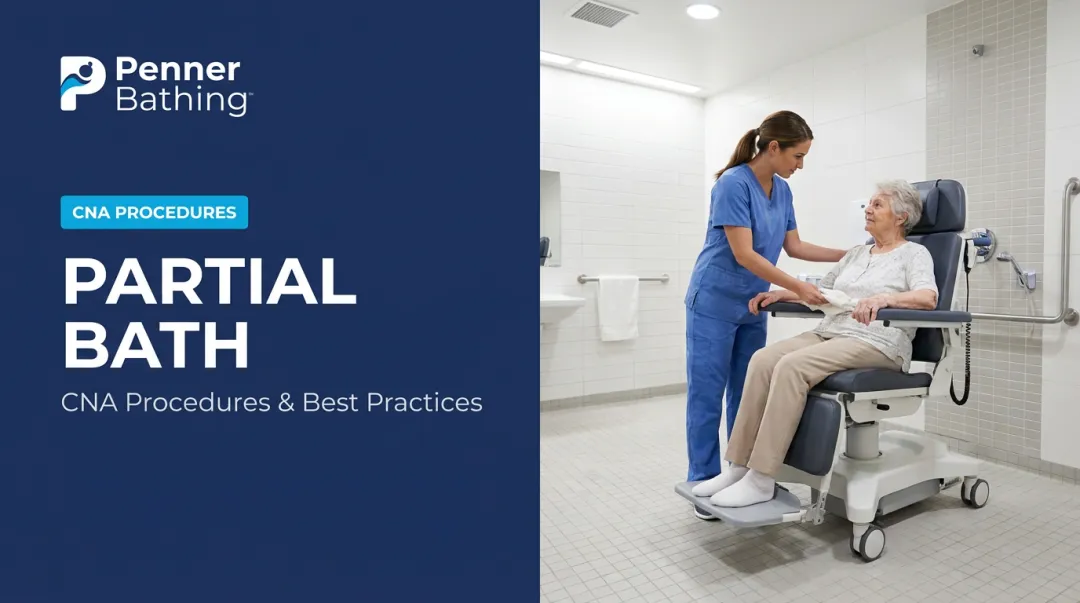
- Partial bed bath – face, underarms, hands, and perineal area, often done daily
- Sink-side sponge bath – for patients with some mobility who can sit at a sink
Beyond cleanliness, sponge baths serve real clinical purposes. They give nurses a routine chance to inspect skin, stimulate circulation with gentle friction, and build rapport during a vulnerable moment of care.
Clean, dry skin plus frequent inspection is a standard part of pressure-injury prevention, used with repositioning and moisture management—not as a stand-alone fix (AHRQ-supported guidance). More than 2.5 million people in the United States develop pressure ulcers each year.

Essential Supplies Nurses and Caregivers Need
Having everything within reach before you start prevents interruptions that leave a patient exposed or chilled. Core supplies:
- Two basins (one for washing, one for rinsing)
- Mild soap and multiple soft washcloths
- Clean rinse cloths and towels
- Gloves (especially for perineal care)
- Waterproof pad to protect linens
- Clean gown and moisturizer
No-Rinse Cleansers and CHG Cloths
No-rinse or disposable cleansing cloths work well when patients can't tolerate repositioning, or when water access and friction are burdensome. A systematic review of bed bath methods found these products broadly comparable to conventional bathing for bacterial removal, though only a handful of the studies were high quality. CHG (chlorhexidine)-based cloths are different. They're an infection-prevention tool, not a hygiene replacement, and should only be used under a facility protocol—typically for ICU decolonization or line-bearing patients. In the REDUCE MRSA trial, daily CHG combined with nasal mupirocin cut bloodstream infections by 44% across 43 hospitals. That result belongs to the combined protocol, not to soap-and-water bathing alone.
Water Temperature Matters
There's no single universal number, contrary to some outdated guidance. Academic home-care procedures generally advise not exceeding 105°F, with the patient testing the water for comfort before it touches their skin. Always defer to your facility's policy. Factor in circulation, cognition, and neuropathy before deciding what feels warm versus hot.
Step-by-Step: How to Give a Sponge Bath
Consistency in sequence matters as much as gentleness. Skipping steps or working out of order raises contamination risk.
Preparation
- Explain the process to the patient and confirm understanding
- Warm the room and close doors or curtains for privacy
- Gather all supplies before starting, including a fresh change of linens
- Place a waterproof pad under the patient and expose only one region at a time
Upper Body
Wash the face first, typically with water only unless the patient requests soap. Move to the neck, ears, and hair if needed.
For the arms and torso, use a soap-then-rinse technique:
- Apply mild soap with one cloth
- Rinse thoroughly with a second cloth
- Pat dry rather than rub
Lower Body
Wash legs and feet, paying close attention to skin folds and the spaces between toes. Moisture left in these areas promotes fungal growth.
Back and Buttocks
Reposition the patient side-lying. Wash and rinse the back, then apply moisturizer while the skin is still slightly damp for better absorption.
Perineal Care
This step comes last, always with a fresh washcloth and gloves. Ask permission before beginning, and explain each step as you go. For female patients, wipe front to back in single strokes, never the reverse.
Finishing
- Dry skin thoroughly, especially in folds
- Apply moisturizer and redress the patient
- Dispose of soiled linens properly
- Document any skin changes, redness, or areas of concern before moving to the next patient

Best Practices for Safety, Comfort, and Dignity
A technically correct bath can still feel dehumanizing if privacy and communication are ignored.
Non-negotiables:
- Keep doors closed and curtains drawn throughout, not just at the start
- Narrate each step before you do it — "I'm going to wash your arm now"
- Use a fresh washcloth per body region; one observational study found staff failed to change soiled cloths in 100% of 50 observed bed baths
- Watch for redness, skin tears, or early pressure injury signs and document immediately
Special Cases
Adapt technique for these common situations:
- Catheters: perform meatal cleansing during the bath; do not apply antiseptics to prevent catheter-associated infections
- IV lines: clean up to the dressing edge and the tubing nearest the skin; leave dressing changes to trained line care
- Fragile or aging skin: use mild soap, warm (not hot) water, and pat rather than rub to avoid tears
When a Sponge Bath Isn't Enough: Alternatives for Long-Term Comfort
Sponge baths handle daily hygiene well, but they can't match full-body immersion for circulation, joint stiffness, and overall comfort. A Japanese crossover study found that 10-minute warm-water immersion produced lower pain and fatigue scores than showering in healthy adults, largely from vasodilation and increased blood flow.
That evidence has not been established for frail, immobile residents. Any move toward immersion bathing should follow a risk assessment for transfers, cardiovascular tolerance, and fall risk.
Many long-term care facilities and assisted living communities default to bed baths not because they are ideal, but because staff time and safe transfer options are limited. One California study observed that 86% of residents complained of feeling cold during manual baths, and most body sites were inadequately cleaned—a resource and workflow gap, not only a training issue.

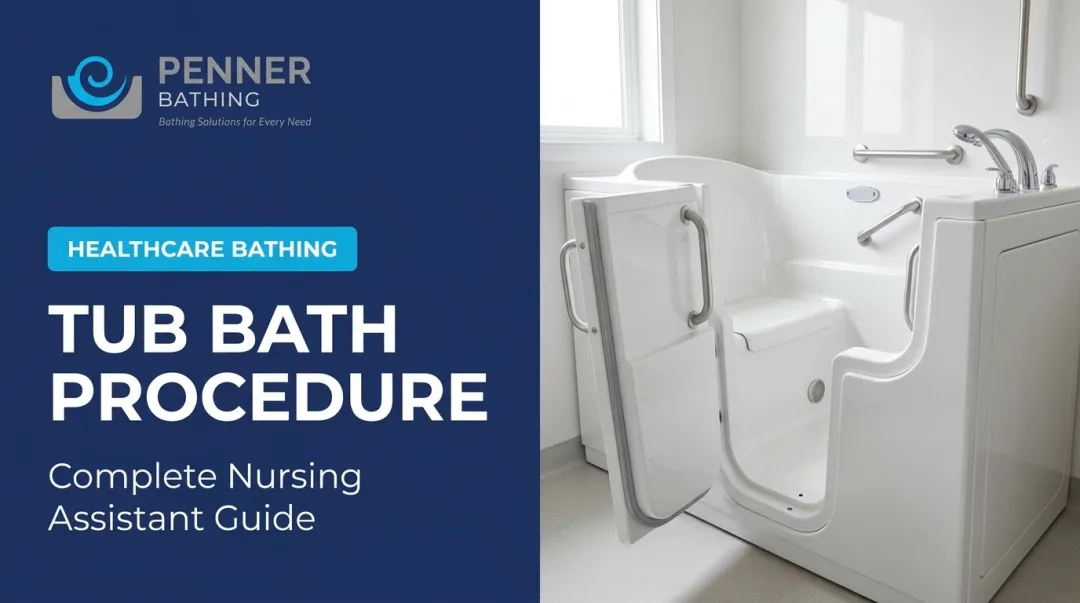
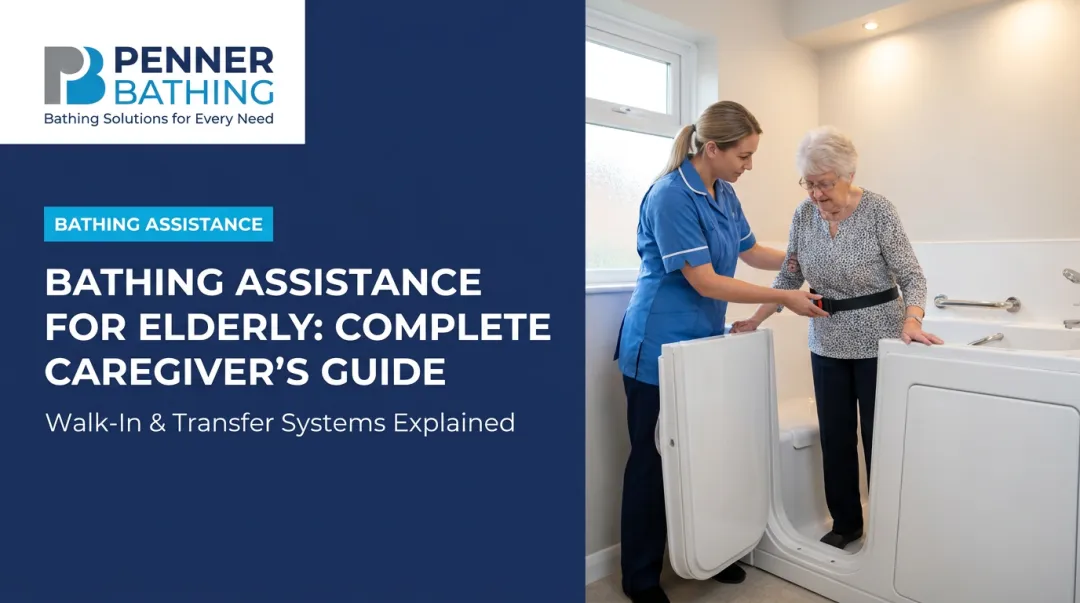
Dedicated bathing equipment closes that gap. Penner Bathing, a family-owned manufacturer based in Aurora, Nebraska, builds healthcare bathing systems for nursing homes and hospitals that need to move past manual sponge routines. Its systems feature:
- Fast-fill reservoirs that reduce prep time compared to manually filling and repositioning basins
- Automatic disinfection cycles that standardize sanitation between residents, reducing the variability that comes with manual cleaning
- BioCote antimicrobial surface protection that stays active for the life of the unit and supports—not replaces—standard infection-control procedures
- Bariatric-rated models supporting up to 600 lbs, alongside standard 400-lb capacity units
Penner offers more than 38 models, including the Contour, Cascade, Premier, and Superior systems, with left-, right-, and end-entry configurations to match room layouts and resident needs.

Healthcare bathing systems typically run $11,000 to $25,000 depending on configuration. The residential Dream Spa Walk-In Bath starts at $5,950 for facilities or families considering a home-based option. For administrators, the real comparison is ongoing staff time for manual baths versus a one-time equipment investment.
Frequently Asked Questions
What is a sponge bath in nursing?
A sponge bath, or bed bath, is cleansing a patient's body in bed using a basin, washcloths, and mild soap. It's used for patients who can't safely access a shower or tub due to mobility or medical limitations.
What do nurses use for a sponge bath?
Core supplies include two basins (wash and rinse), mild soap, multiple washcloths, towels, gloves for perineal care, and a waterproof pad. No-rinse cleansers or CHG cloths may be used depending on the patient's needs and facility protocol.
Is a sponge bath as good as a regular bath?
Sponge baths meet daily hygiene needs effectively, but they don't provide the circulation and comfort benefits of full-body immersion. Immersion may reduce pain and stiffness, though it requires careful risk assessment for frail patients.
How often should a bedridden patient receive a sponge bath?
Partial baths (face, hands, perineal area) are typically done daily, with full bed baths performed as needed based on the care plan. Frequency should adjust for incontinence, skin condition, and infection-control protocols.
Can sponge baths help prevent bed sores?
Clean, dry skin and regular inspection during bathing support pressure-injury prevention, but bathing alone isn't sufficient. It must be paired with repositioning, moisture management, and nutrition to meaningfully reduce risk.