
The consequences go beyond the ER visit. A hip fracture or head injury can mean months of rehab, a permanent loss of independence, or a forced move out of the family home. For long-term care facilities, it can also mean liability exposure and added staff burden.
This guide walks through why standard tubs create risk, how to assess your own needs, and which upgrades — from a $20 grab bar to a full walk-in tub — actually solve the problem.
Key Takeaways
- Bathroom falls send 234,000+ people to U.S. ERs yearly; tubs and showers factor in over two-thirds of cases
- Grab bars and mats help, but they don't fix high tub-wall thresholds
- Walk-in tubs and curbless showers eliminate the step-over hazard entirely
- Long-term care must balance infection control, staff time, and resident mobility
- Match the solution to current mobility needs—not budget alone
Why Standard Bathtubs Are a Safety Risk
Standard tubs weren't designed with aging bodies in mind. Most risk comes down to three things: a high entry wall, a slick wet surface, and nothing sturdy to hold onto during the transfer.
The risk climbs as balance, strength, and flexibility decline with age. CDC data shows injury rates jump from 112.1 per 100,000 at ages 65-74 to 515.3 per 100,000 at 85+, a near five-fold increase (CDC, 2011).
The danger isn't confined to stepping in. CDC's activity breakdown found:
- 27.5% of injuries happened during bathing or showering itself
- 17.3% were slips
- 9.8% occurred getting out of the tub
- Only 2.2% happened getting in

Getting out is riskier than getting in. Any safety plan needs to address the whole bathing sequence, not just the entry step.
Environment matters just as much as the tub. Poor lighting, a slick bath mat, or clutter near the tub all raise fall risk independent of tub design.
Mobility also changes over time, so a setup that works today may not work in two years. Accessibility isn't a "set it and forget it" project. It deserves a periodic re-check.
Assessing Your Bathtub Accessibility Needs
General Mobility Considerations
Before buying anything, answer a few honest questions:
- Can the person stand unsupported for several minutes without wobbling or needing to lean on something?
- Can they lift a leg over a 4-6 inch tub wall without pain or loss of balance?
- Do they use a wheelchair, walker, or cane for daily mobility?
- Has there been a fall or near-fall in the bathroom in the last year?
The answers point toward a right level of support. Someone who's steady but occasionally needs a handhold might only need grab bars. Someone who can't manage a step-over safely, or who transfers from a wheelchair, needs a low-threshold walk-in tub or a curbless shower conversion.
Considerations for Long-Term Care Settings
Facilities face a different equation. Beyond resident safety, nursing homes and assisted living communities have to manage:
- Staff time across dozens of daily bathing transfers
- Infection control between residents using shared equipment
- Regulatory compliance under CMS long-term care rules (42 CFR Part 483) for Medicare/Medicaid facilities
A 2025 multisociety infection-prevention report found that poorly cleaned shared bathing equipment has contributed to infection transmission in nursing homes.
Commercial-grade systems address that risk directly. Penner Bathing's healthcare bathing systems include automatic disinfection cycles standard on most models, which cuts down on manual cleaning inconsistencies between residents. Several models also include fast-fill reservoirs that shorten the wait on each bath, a real factor when one aide might handle a dozen transfers per shift.

Assisted living communities should also confirm requirements with their state licensing body, since assisted living rules (unlike nursing homes) vary state by state rather than following one federal standard.
Low-Cost & DIY Accessibility Upgrades
Not everyone needs (or can afford) a full tub replacement right away. These upgrades help in the meantime:
- Grab bars — Install near the entry and inside the tub, anchored into a wood stud, not drywall. AARP warns that towel bars and unanchored bars are not safe substitutes.
- Non-slip mats or coatings — Reduce slipping on wet surfaces, though they don't help with getting in or out.
- Portable bath seats or transfer benches — Let someone bathe seated instead of standing, useful when standing unsupported isn't possible.
A word of caution on suction-cup and rim-mounted devices: A 2024 study testing installation by older adults found 15% of suction-cup handholds failed load testing, and 95% of rim-mounted tub rails failed, with none successfully installed. These aren't a substitute for a properly anchored bar.
None of these upgrades change the tub's threshold height. If someone genuinely can't step over the wall, grab bars alone won't fix that.

Full Accessibility Solutions: Walk-In Tubs & Conversions
Walk-In Tubs
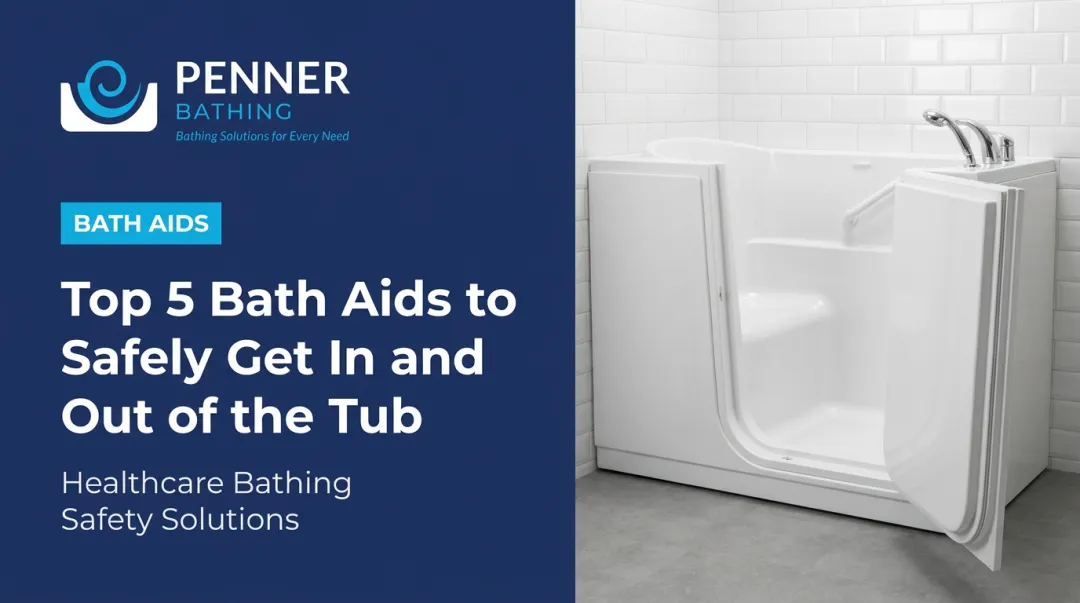
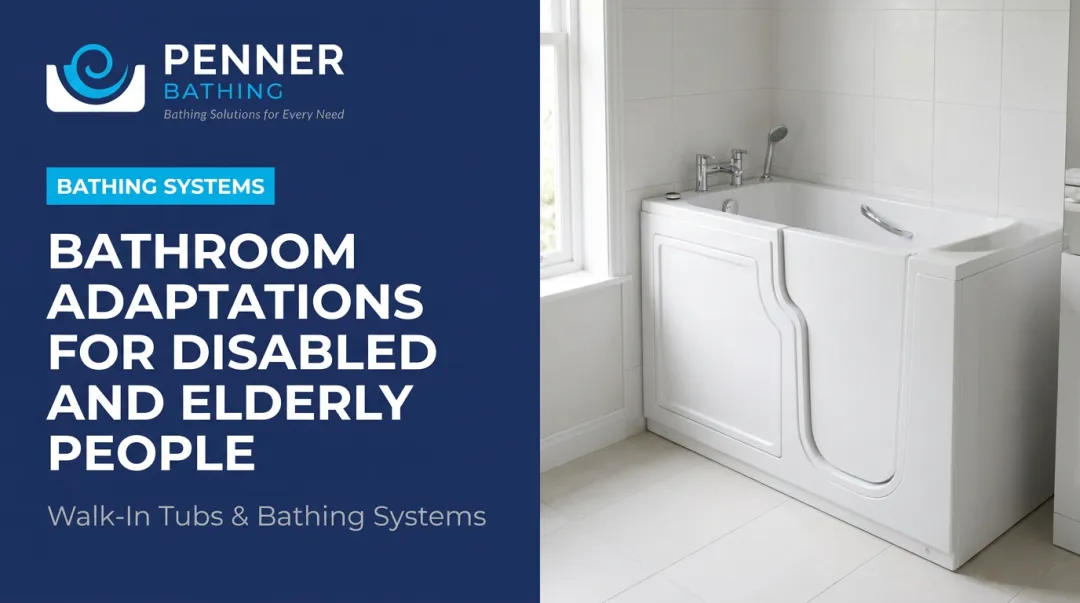
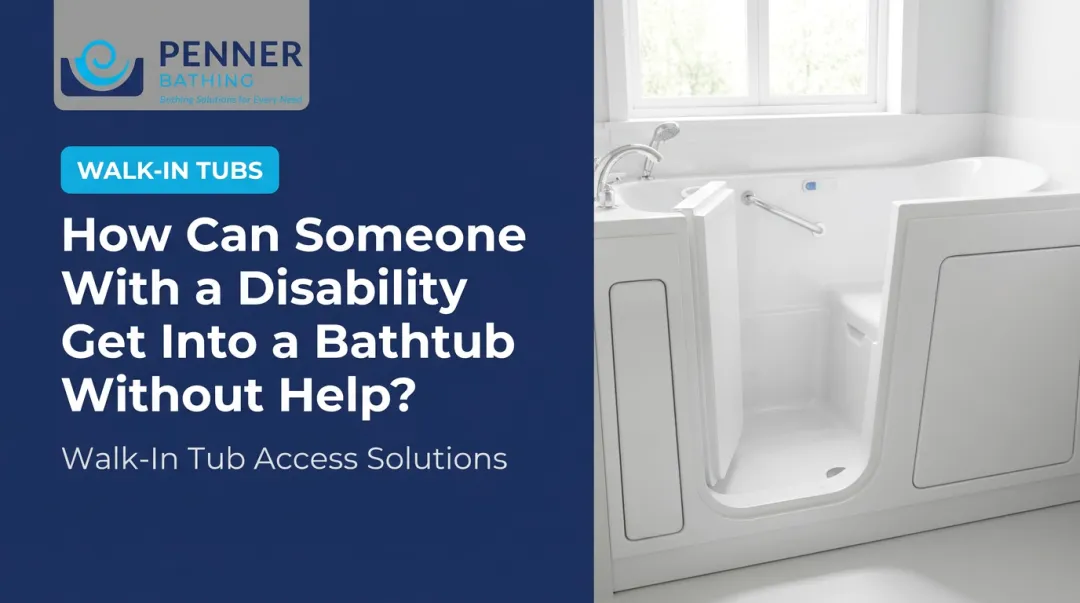
A walk-in tub replaces the step-over entry with a low-threshold, watertight door and a built-in seat. Instead of climbing over a wall, the user opens the door, sits down, and swings their legs in. This directly removes the biggest fall-risk factor: the transfer over a high tub wall.
Penner's Dream Spa Walk-In Bath is a residential example built on this principle — a wide swing-out door designed to minimize trip hazards, sized to fit into a standard bathtub space without major remodeling.

Tub-to-Shower Conversions
For those who can't manage any step at all, converting the tub to a curbless shower removes the barrier entirely. Consumer Reports recommends pairing curbless showers with a seat, grab bars, a handheld showerhead, and slip-resistant flooring (Consumer Reports).
Therapeutic Features Worth Considering
If a full soak still matters, walk-in tubs can add therapy on top of safer entry. Premium models such as Penner's Dream Spa include:
- Aqua-Aire jet systems for muscle and joint relief
- Heated seat, heated back, and heated air to maintain warmth during bathing
- Optional microbubble technology, which Penner documents as delivering up to 50% more dissolved oxygen than tap water
These features matter for people managing arthritis or chronic muscle pain — safety first, with real relief built in.
Installation Considerations
Before committing, check:
- Floor load capacity — a filled walk-in tub is heavy; confirm your subfloor can handle it
- Water heater capacity — some models hold significantly more water than a standard tub
- GFCI electrical requirements — bathrooms have required GFCI protection since 1975 under the National Electrical Code (CPSC)

A qualified installer should confirm these specs against your home's actual plumbing and electrical setup — figures vary by model and by house.
Common Mistakes to Avoid
- Grab bars alone: They help with balance but do nothing about a 4- to 6-inch threshold. If stepping over is the issue, bars won't fix it.
- Price-only shopping: A cheap tub that doesn't match current or near-future mobility needs is money spent twice—once now, and again when it needs replacing.
- Ignoring flooring and lighting: Even a $15,000 walk-in tub is still a fall risk on a slippery floor. Fix the whole room, not just the tub.
Each of these mistakes leads to the same outcome: continued fall risk despite the money spent. Match the fix to the actual problem.
Conclusion
Bathtub safety comes down to matching the solution to how someone actually moves today, and how they're likely to move in a few years. A grab bar might be enough now. It might not be enough next year.
Treat bathroom accessibility as an ongoing investment in independence, not a single purchase you make once and forget.
Frequently Asked Questions
Can a bathtub be ADA compliant?
ADA Section 607 standards apply mainly to public and commercial facilities, not private homes. Requirements include specific clear floor space, a seat, grab bars, and accessible controls.
How can I make my bathtub more accessible?
Options range from low-cost fixes like anchored grab bars and non-slip mats to full walk-in tub replacement or a curbless shower conversion. The right choice depends on current mobility level.
What is the best way for seniors to get out of a bathtub?
Anchored grab bars near the exit point help, as do transfer benches for seated exits. For those with significant mobility limits, a low-threshold walk-in tub removes the step-over hazard entirely.
What does it mean when a bathtub is mobility accessible?
A mobility-accessible bathtub has a low entry threshold, a built-in seat, secure grab bars, and non-slip surfacing. Those features reduce the physical demands of getting in, bathing, and getting out safely.
How much does it cost to make a bathtub accessible?
Costs range widely: grab bars and mats cost under $100, while full walk-in tub installation runs into the thousands. Penner's residential Dream Spa Walk-In Bath starts at $5,950, with healthcare-grade systems ranging from $11,000 to $25,000 depending on model and features.
Are walk-in tubs covered by insurance or Medicare?
Medicare rarely covers walk-in tubs outright, since Medicare.gov doesn't list them as standard durable medical equipment. HSA/FSA funds, VA grants (up to $6,800 for eligible veterans), and some Medicare Advantage plans may help offset costs.