
Hospitals, nursing homes, and assisted living communities all lean on disinfection protocols to protect residents and patients who often have weaker immune defenses. Get it wrong, and the consequences aren't abstract.
This guide breaks down the disinfectant types available, how to choose one that actually works for your facility, and a risk area many infection control plans overlook entirely: bathing equipment.
Key Takeaways
- HAIs remain common and costly—but proper disinfection protocols prevent most of them
- Broad-spectrum, EPA-registered products with proven biofilm efficacy deliver the strongest protection
- High-moisture zones like bathing equipment need built-in antimicrobials—not wipe-downs alone
- Staff training and protocol adherence matter as much as the chemistry itself
Why Infection Control Matters in Healthcare Facilities
Healthcare-associated infections (HAIs) spread through:
- Contaminated surfaces
- Shared equipment
- Healthcare worker contact
- Airborne transmission
For elderly or immunocompromised patients, the stakes are higher: their bodies simply can't fight off exposures that a healthy adult might shrug off.
Terminal cleaning—the deep clean after discharge—isn't as thorough as facilities assume. A 2015 ICU study found 8% of rooms carried a multidrug-resistant organism (MDRO) at discharge, and 6% still did after routine terminal cleaning. Hydrogen peroxide treatment dropped that figure to 0.5%.
That residual contamination has real consequences. A 2023 systematic review found patients admitted to rooms previously occupied by an infected patient face roughly 2.5 times higher odds of acquiring that organism themselves.
For long-term care facilities and hospitals, HAIs bring:
- Extended patient stays and added treatment costs
- Regulatory scrutiny and potential penalties
- Staff burden from outbreak response and extra cleaning cycles
- Emotional toll on residents, families, and care teams
Types of Healthcare Disinfectants Used for Infection Control
Not every disinfectant fights every pathogen. Choosing the wrong one leaves gaps in your protection.
| Type | Best for | Sporicidal? |
|---|---|---|
| QACs | Routine surfaces, non-critical equipment | No |
| Hydrogen peroxide | Broad-spectrum surface work | Some formulas |
| Alcohol (60-90%) | Small devices and touchpoints | No |
| UVC light | No-touch adjunct for air/surfaces | Not a cleaner |
| Chlorine/bleach | C. difficile and spore risk | Yes |

Quaternary Ammonium Compounds (QACs)
QACs are the workhorses of routine cleaning: floors, walls, countertops, and non-critical equipment like blood pressure cuffs. They're low-irritation and gentle on most surfaces, so daily use stays practical. The catch: QACs aren't sporicidal, so they won't touch C. difficile spores.
Hydrogen Peroxide-Based Disinfectants
Hydrogen peroxide disinfectants offer broad-spectrum kill against bacteria, viruses, and fungi with lower toxicity than older chemistries. Some accelerated formulations work in minutes; others need hours of contact time for sporicidal claims. Always check the specific product label.
Alcohol-Based Disinfectants
Alcohol at 60-90% concentration works fast on small surfaces and items like stethoscopes and thermometers. It's a poor fit for large surfaces since it evaporates quickly, and it does not kill bacterial spores.
UV Light and Advanced Technologies
UVC light disinfects surfaces, air, and hard-to-reach equipment like endoscopes without chemicals. Use it as a no-touch adjunct, not a standalone solution. Shadowing and line-of-sight limits mean it can't replace manual cleaning.
Chlorine/Bleach and Sporicidal Agents
Bleach remains one of the few EPA-registered chemistries proven against C. difficile endospores. Per the CDC's chemical disinfectants guidance, 5,000 ppm bleach inactivated spores within 10 minutes. The trade-off is corrosion risk and odor, so handle it carefully.
Match the chemistry to the pathogen risk on each surface. Routine QACs cover day-to-day needs; reach for a sporicidal agent when C. difficile is in play.
How to Choose the Right Disinfectant for Your Facility
Picking a disinfectant shouldn't be a guessing game. Start with the pathogen, not the marketing copy.
Check the EPA's registered lists first. The EPA maintains organism-specific lists, including List K for C. difficile, List H for MRSA/VRE, List P for Candida auris, and List G for norovirus. Match the exact EPA Registration Number on your product label to the list entry before you buy.
Once you've confirmed pathogen coverage, work through these factors:
- Dwell time and application method: Check the master label for spray versus wipe instructions and how long the surface must stay wet.
- Biofilm efficacy: Up to 80% of bacteria may live in protective biofilm colonies, so look for products validated against biofilm, not just free-floating organisms.
- HMIS safety ratings: A 0/0/0 score (health, flammability, physical hazard) means lower risk to staff and patients handling the product daily.
- Material compatibility: Check pH levels against your mattresses, floor finishes, and medical equipment; some sporicidal chemistries are aggressive enough to degrade seals and surfaces over time.

A "hospital-grade" label without a matching EPA pathogen claim doesn't guarantee protection. Match the number, not the marketing.
Infection Control Beyond Surfaces: Protecting High-Risk Bathing Environments
Most infection control plans focus on floors, bed rails, and doorknobs. Bathing equipment gets overlooked, despite checking every box for HAI risk:
- Constant moisture
- Shared use between residents
- Complex surfaces that are hard to reach manually
Manual disinfection protocols have a built-in weak spot. A 2022 study found terminal cleaning thoroughness averaged just 37.5% across high-touch objects (2022 terminal cleaning study). During busy shift changes, steps get skipped. Nobody does this on purpose. It's just what happens when staff are stretched thin and moving fast.
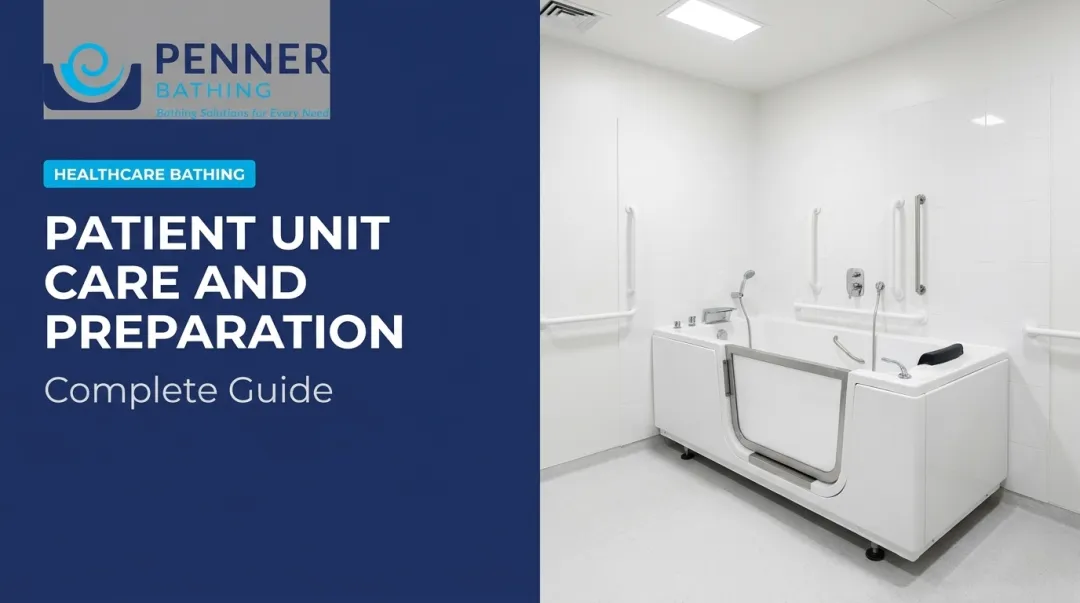
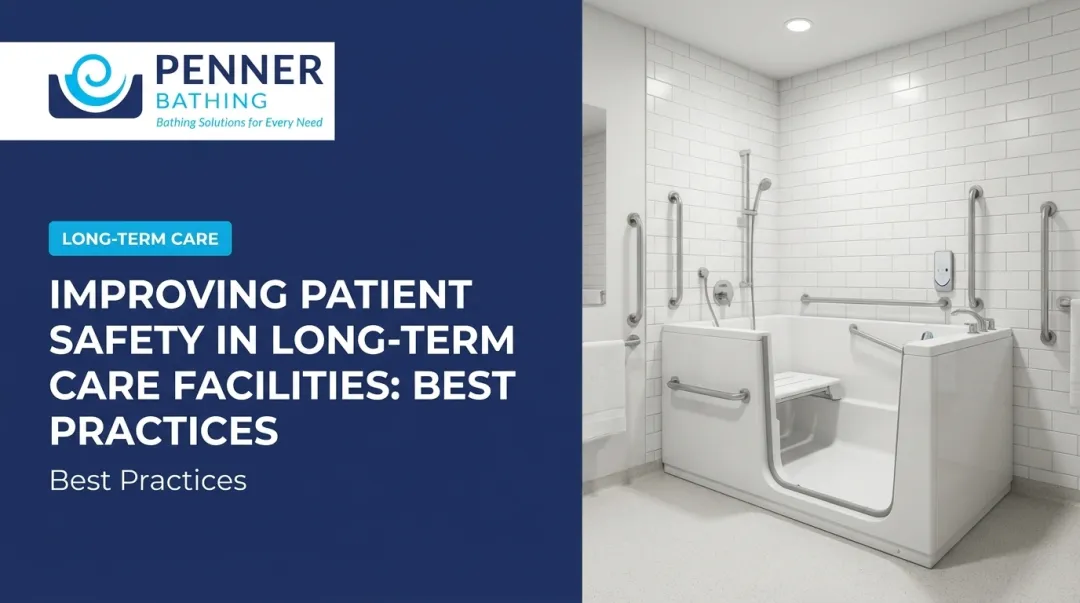
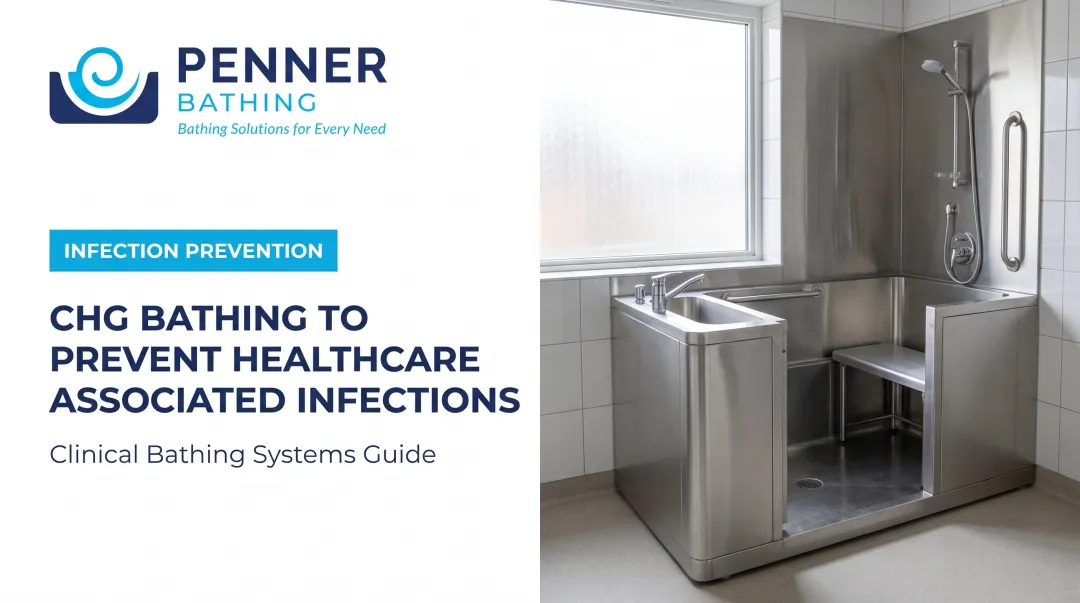
This is where engineered solutions fill the gap manual processes leave open. Penner Bathing builds automatic disinfection cycles into every bathing system model, so the tub runs a disinfection cycle between uses instead of relying on every manual step being completed under time pressure. Cascade models, for instance, include dedicated Disinfect Jets controls separate from rinse functions.
Penner systems also add two continuous safeguards on the equipment itself:
- Automatic disinfection cycles standard on all models, reducing dependence on shift-to-shift manual steps
- BioCote antimicrobial protection on treated surfaces, active around the clock for the life of the spa

BioCote reduces bacterial growth on protected surfaces. It does not protect users against disease-causing organisms and is not a substitute for proper cleaning.
That distinction matters. Automatic cycles and antimicrobial surfaces should complement your facility-wide chemical disinfection protocol, not replace it. Used together, they close a gap that surface-only programs often miss in the bathing room.
Best Practices for Sustaining an Effective Disinfection Program
Good chemistry doesn't fix a broken process. The strongest programs combine the right products with consistent execution.
- Train and verify regularly. CDC recommends structured onboarding plus periodic competency checks, not a one-time session staff never revisit.
- Standardize your products. Fewer disinfectants in rotation means less confusion over dilution ratios, contact times, and chemical-mixing risks.
- Pair chemistry with engineering. Add antimicrobial-protected equipment in high-touch, high-moisture zones like bathing stations, where manual protocols are hardest to enforce consistently.
- Audit the process, not just the outcome. Check whether staff hit proper wet contact time and cover every surface, not just whether the room looks clean.
That engineering layer matters most at bathing stations, where moisture and high-touch surfaces meet. Penner Bathing supplies a Whirlpool Disinfectant Cleaner that is EPA-registered for whirlpool bathing systems and effective against MRSA, HIV-1, and coronavirus, including in hard water. Facilities can order it directly, with next-day air parts shipping on orders placed before 2 PM CST, so equipment stays ready and disinfection routines stay on schedule.

Frequently Asked Questions
Where can I buy hospital grade disinfectant?
Hospital-grade disinfectants are available through EPA-registered medical supply distributors, janitorial supply companies, or directly from manufacturers. Always verify the EPA Registration Number on the label before purchasing.
What cleaning supplies do hospitals use?
Core categories include EPA-registered surface disinfectants, alcohol-based hand sanitizers, PPE, microfiber cloths, and specialized equipment cleaners for items like bathing systems and mobility equipment.
What are the top 5 chemical disinfectants used in hospitals?
The five most common are QACs, hydrogen peroxide-based solutions, alcohol-based disinfectants, chlorine/bleach compounds, and peracetic acid. Choose by pathogen target, surface type, and required contact time.
What are 5 examples of disinfectants?
- QACs — routine floors and furniture
- Hydrogen peroxide — broad-spectrum hard surfaces
- Alcohol — small items such as stethoscopes
- Bleach — sporicidal needs, including C. difficile
- UVC light — room and equipment cycle disinfection
How often should healthcare facilities disinfect high-touch surfaces and equipment?
Frequency depends on facility policy and CDC/EPA guidance. Shared equipment like bathing systems benefits from continuous or automatic disinfection between uses, rather than relying solely on periodic manual cleaning.