
Infection control is one of the most critical responsibilities in long-term care. For Directors of Nursing and Administrators, dependable hygiene is not a preference. Automated disinfection systems are changing how facilities approach this ongoing concern. Facilities that adopt these systems see stronger infection management, lower overhead, and less pressure on already stretched care teams.
The Hidden Costs of Manual Disinfection
Manual disinfection protocols carry more financial burden than most facilities realize at first glance. Staff time spent cleaning between residents adds up quickly during a single shift. Chemical usage without proper measurement leads to waste or under-treatment. Both outcomes directly affect the budget.
There is also the cost of non-compliance. Regulatory citations tied to infection control are expensive. They damage a facility's reputation and can trigger corrective action plans. These are avoidable consequences with the right equipment in place.
Facilities relying on manual routines also face training-related challenges. New employees require detailed instruction. That instruction takes time away from direct care. And even well-prepared personnel can make mistakes under pressure.
Why Human Error Is Inevitable in Manual Processes
No staff member intends to miss a step. But in a demanding care environment, mistakes happen. A resident needs immediate attention. A shift runs long. A new hire is uncertain about protocol. These are realistic, everyday scenarios in any long-term care setting.
When disinfection steps are incomplete or skipped, the consequences can be significant:
- Cross-contamination between residents becomes a genuine risk
- Infection outbreaks can spread rapidly in shared care settings
- Documentation gaps create vulnerabilities during inspections and surveys
- Care teams may face unnecessary exposure to harmful pathogens
- Resident families lose confidence in the facility's hygiene practices
Manual routines place an unfair burden on care teams. They are asked to maintain perfect uniformity in an environment that rarely allows for it.
How Automated Disinfection Systems Deliver Consistency
Automated disinfection systems remove variability from the equation. The cycle runs the same way every time. It does not depend on who is working that day or how demanding the floor is.
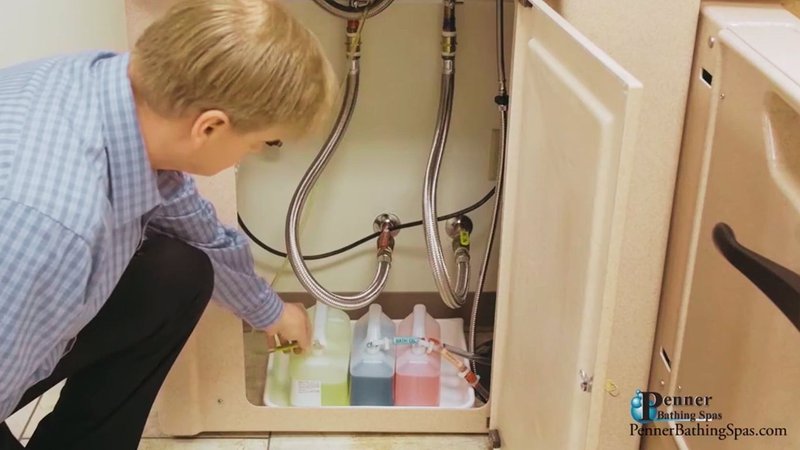
These systems use integrated disinfection cycles. Each one activates after every use. It delivers the correct amount of disinfectant at the right concentration. It runs for the required duration without requiring manual oversight. Care teams simply initiate the cycle and return to residents.
This reliability is especially important in long-term care settings. Residents often have compromised immune systems. The margin for error is narrower than in many other healthcare environments. A system that guarantees the same outcome every cycle directly addresses that concern.
Automated disinfection also supports recordkeeping. Many systems generate documentation for each completed cycle. This creates a verifiable audit trail. It reduces citation risk during surveys and inspections, which builds trust with regulators and families alike.
The Financial Case for Automated Disinfection in Long-Term Care
The return on investment for automated disinfection systems is both measurable and meaningful. Facilities typically see savings in several areas.
- Labor expenditures decrease when care teams are no longer performing multi-step manual cleaning routines between residents. That recovered time gets redirected to direct resident care.
- Chemical usage becomes more predictable. Automated systems dispense precise amounts each cycle. There is no over-application and no waste.
- Outbreak-related expenses also decline. Fewer infections mean fewer medical interventions. They also reduce the likelihood of regulatory scrutiny and reputational harm.
- Equipment longevity improves as well. Proper, uniform disinfection protects the integrity of bathing equipment over time. Facilities avoid premature replacements. That is a tangible, long-term financial advantage.
When these factors are weighed together, the case for automation is clear. It is not just a hygiene decision. It is a sound operational investment.
Make Disinfection a Standard, Not an Add-On
Penner Bathing has been designing bathing systems for long-term care and assisted living facilities since 1980. Every model includes a built-in disinfection system as a standard feature. This is not an optional upgrade. It is part of how every unit is engineered from the start.
That design philosophy reflects a clear commitment. Administrators should not have to choose between affordability and infection control. With Penner Bathing, both come standard.
Penner Bathing offers 40 different combinations of bathing systems. Facilities can find a configuration suited to their space, resident population, and daily workflow. Every option provides the same consistent, automated disinfection cycle.
If your team is evaluating bathing equipment, disinfection capability should be at the top of the list. Contact Penner Bathing today to discover how their systems can strengthen your care standards and support long-term financial efficiency.